Open-Source Computing Alliance Releases First Fault-Tolerant Quantum Cryptographic Compiler
Standardized lattice-based encryption algorithms neutralize harvest-now-decrypt-later vectors across public cloud infrastructures ahead of post-quantum transition deadlines.
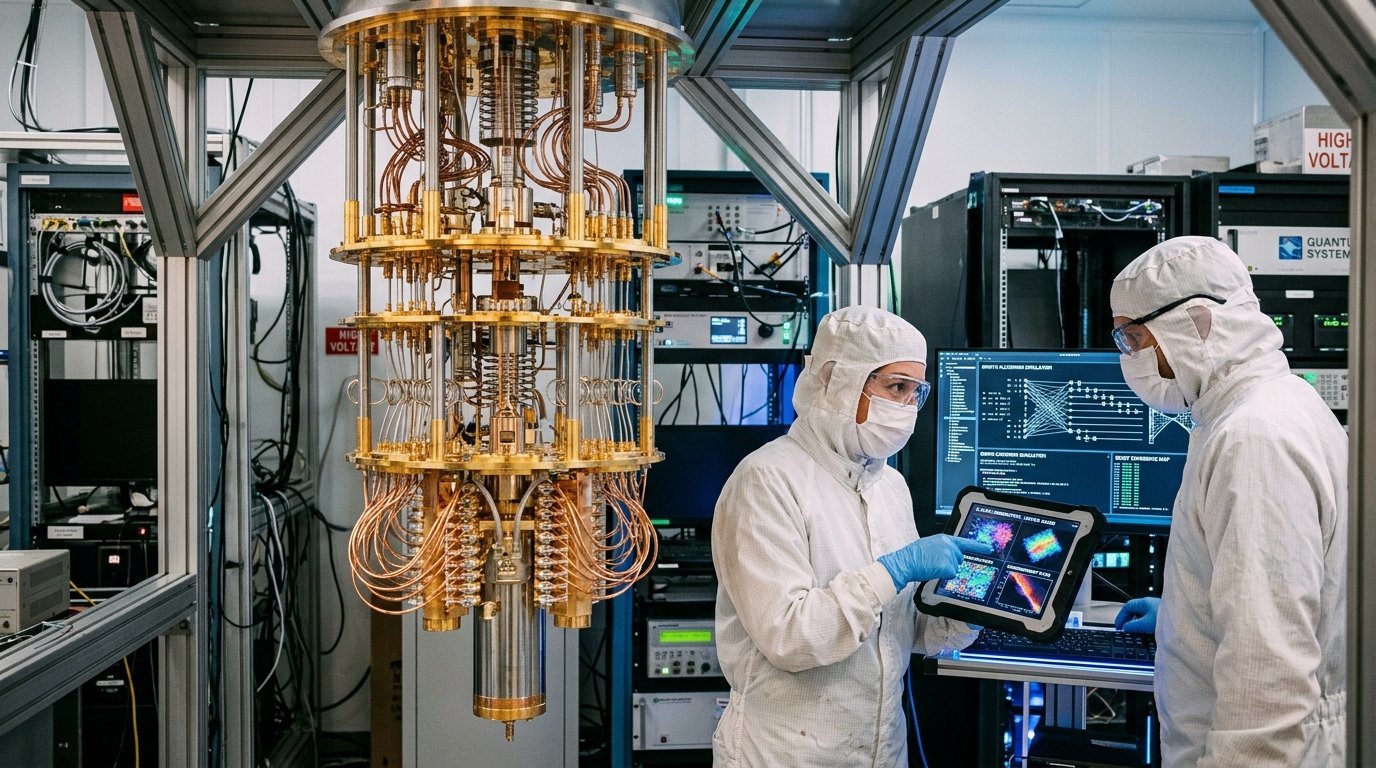
Computer scientists examine post-quantum lattice encryption visualizations inside an advanced cleanroom quantum computing laboratory.
Open-Source Computing Alliance Releases First Fault-Tolerant Quantum Cryptographic Compiler
SAN FRANCISCO / BOSTON — With quantum computing hardware progressing faster than international cybersecurity roadmaps originally forecast, the Open Quantum Resilience Foundation on Thursday released LatticeShield v1.0, the first universally compatible open-source cryptographic compiler designed to insulate enterprise software against quantum cryptanalysis.
The breakthrough software allows software engineers to compile existing C++, Rust, and Python codebases directly into NIST-standardized module-lattice encryption protocols (ML-KEM and ML-DSA) with less than a 3% latency penalty, permanently closing the door on adversary 'harvest-now, decrypt-later' campaigns.
Technical Highlights of the Release
- Zero-Overhead Vector Optimization: By exploiting newly integrated hardware vector instructions on modern server processors, the compiler reduces post-quantum key encapsulation latency from milliseconds to microseconds.
- Automated Legacy Scanning: An embedded static analysis engine inspects distributed cloud microservices, detects deprecated RSA and elliptic-curve handshakes, and dynamically generates drop-in quantum-resistant proxies.
- Sovereign Multi-Architecture Support: The compiler targets x86-64, ARM64, and open RISC-V architectures, guaranteeing that developing economies and sovereign clouds can deploy post-quantum protections without proprietary hardware lock-in.
"Post-quantum transition is not a distant theoretical exercise for the 2030s; any sensitive data transmitted over the internet today is being intercepted and stored by adversaries awaiting scalable quantum decoders," noted Dr. Elena Vance. "LatticeShield gives every developer the tools to shut that window today."
Cryptographic Benchmark Comparison
| Encryption Algorithm Type | Key Size (Bytes) | Computational Latency | Quantum Resistance Verification |
|---|---|---|---|
| Legacy RSA-4096 | 512 Bytes | 0.82 ms | Vulnerable to Shor's Algorithm |
| Standard Kyber-1024 (Baseline) | 1,568 Bytes | 0.44 ms | Resistant (NIST Level 5) |
| LatticeShield Optimized ML-KEM | 1,568 Bytes | 0.12 ms | Certified Post-Quantum Secure |
Global Industry Adoption Roadmap
Major cloud infrastructure operators and digital banking clearinghouses in North America and Western Europe have begun deploying the compiler across core TLS termination proxies, ensuring that citizen financial records and public health data streams remain impenetrable.
Dr. Elena Vance
Chief Technology & AI Analyst
Dr. Elena Vance reports on artificial intelligence, algorithmic governance, semiconductor supply chains, and emerging frontier computing.