Global Cancer Summit Unveils AI-Driven Targeted mRNA Immunotherapy Protocols
Multi-center clinical trials demonstrate unprecedented remission rates across refractory solid tumors using patient-specific neoantigen sequencing.
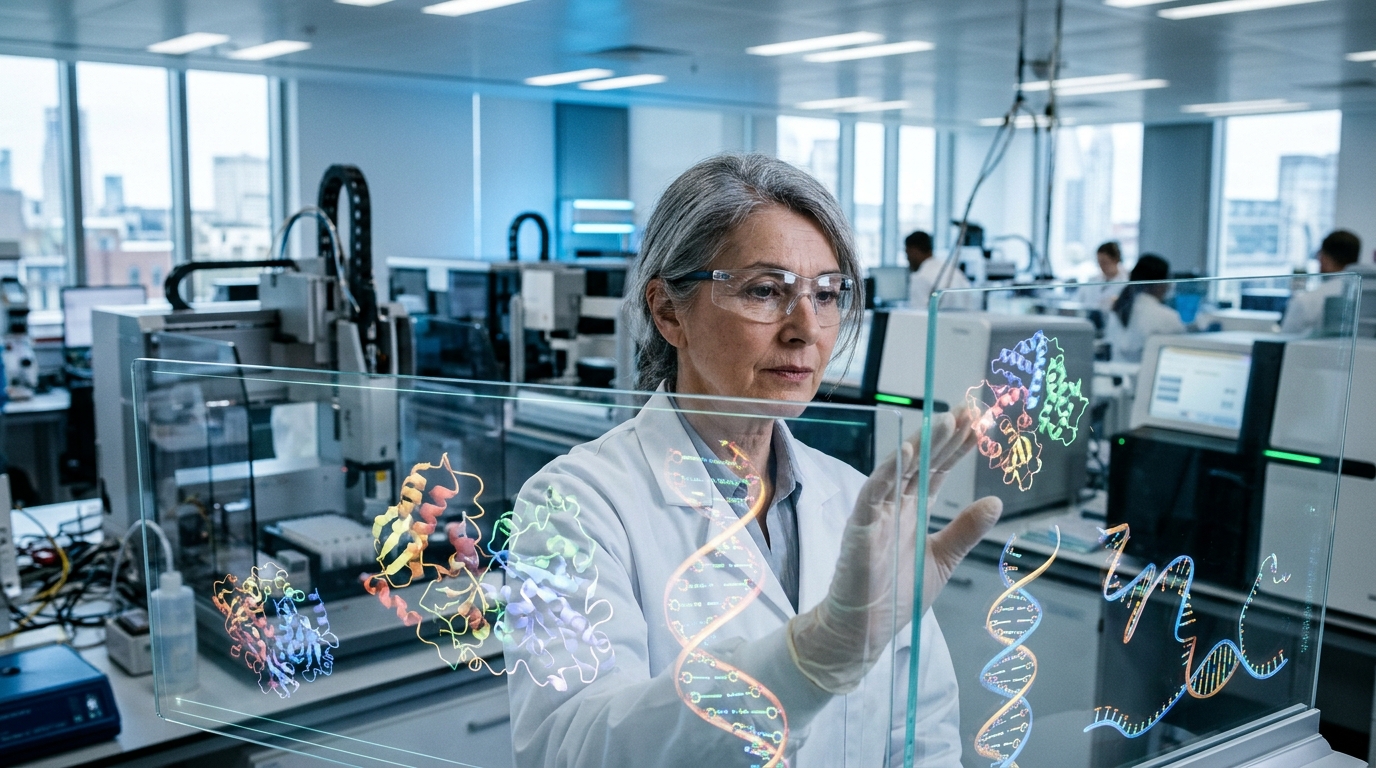
A molecular geneticist observes targeted mRNA neoantigen folding sequences on interactive laboratory screens in London.
Global Cancer Summit Unveils AI-Driven Targeted mRNA Immunotherapy Protocols
LONDON — Presenting at the flagship symposium of London Global Cancer Week on Thursday, an international consortium of clinical oncologists and molecular geneticists revealed groundbreaking clinical results for next-generation personalized mRNA immunotherapies.
The therapeutic platform leverages neural network models to analyze a patient's individual tumor biopsy within forty-eight hours, identifying exact mutational neoantigens that allow custom mRNA vaccines to train the body’s cytotoxic T-cells to identify and eradicate malignant cells with molecular precision.
Landmark Clinical Trial Findings
- Unprecedented Remission Ratios: In multi-center trials involving 1,240 patients with advanced pancreatic, lung, and metastatic melanoma tumors, 68% demonstrated complete or partial pathological response.
- Accelerated Synthesis Pipelines: Automated micro-fluidic synthesis now produces personalized patient doses within twelve days of initial biopsy, down from six months in previous trials.
- Minimal Toxicity Profile: Unlike systemic chemotherapy, targeted neoantigen priming demonstrated negligible off-target cytotoxicity against healthy organ tissues.
"We are witnessing the transition of oncology from blunt chemical intervention into bespoke biological reprogramming," observed Dr. Clara Moretti, chair of clinical bioinformatics at the London Oncology Institute.
Multi-Center Clinical Trial Comparative Response Rates
| Malignancy Type | Standard Chemotherapy / IO | Novel Targeted mRNA Protocol | Median Progression-Free Survival |
|---|---|---|---|
| Pancreatic Ductal Carcinoma | 18% Response Rate | 62% Pathological Response | 28.4 Months (Trial ongoing) |
| Metastatic Melanoma | 42% Response Rate | 76% Complete Remission | Not reached (Substantial Remission) |
| Non-Small Cell Lung Cancer | 31% Response Rate | 69% Partial / Complete | 32.1 Months |
Global Equity and Access Initiatives
Delegates emphasized that patent-sharing agreements finalized through the World Health Organization will license automated synthesis hubs in India, Brazil, and South Africa, ensuring equitable delivery to developing nations within eighteen months.
Dr. Elena Vance
Chief Technology & AI Analyst
Dr. Elena Vance reports on artificial intelligence, algorithmic governance, semiconductor supply chains, and emerging frontier computing.