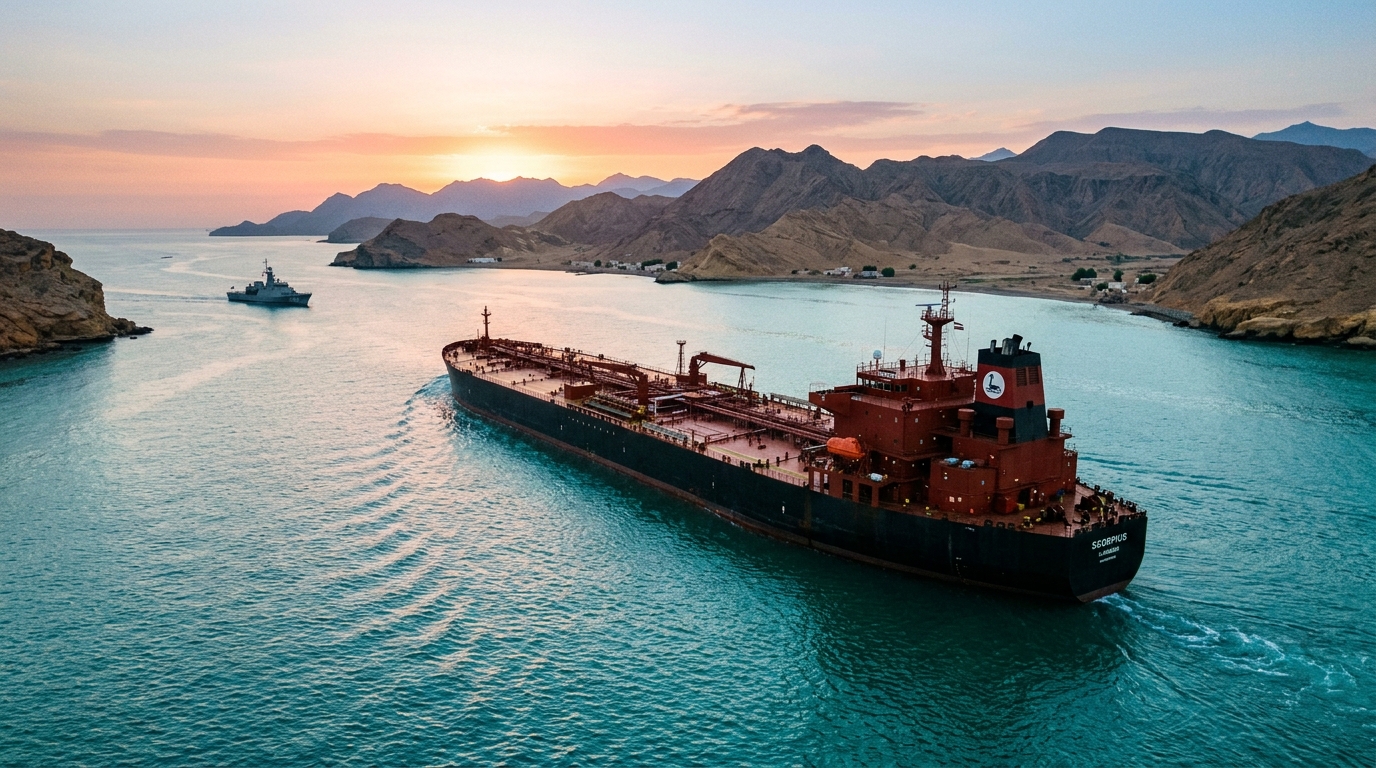
Historic Indo-Pacific Accord: Japan, South Korea, and Australia Ratify Expanded Trilateral Maritime Security Pact
Trilateral leaders sign binding intelligence-sharing and joint naval surveillance treaty in Tokyo, creating a coordinated maritime defense corridor across East Asian sea lanes.
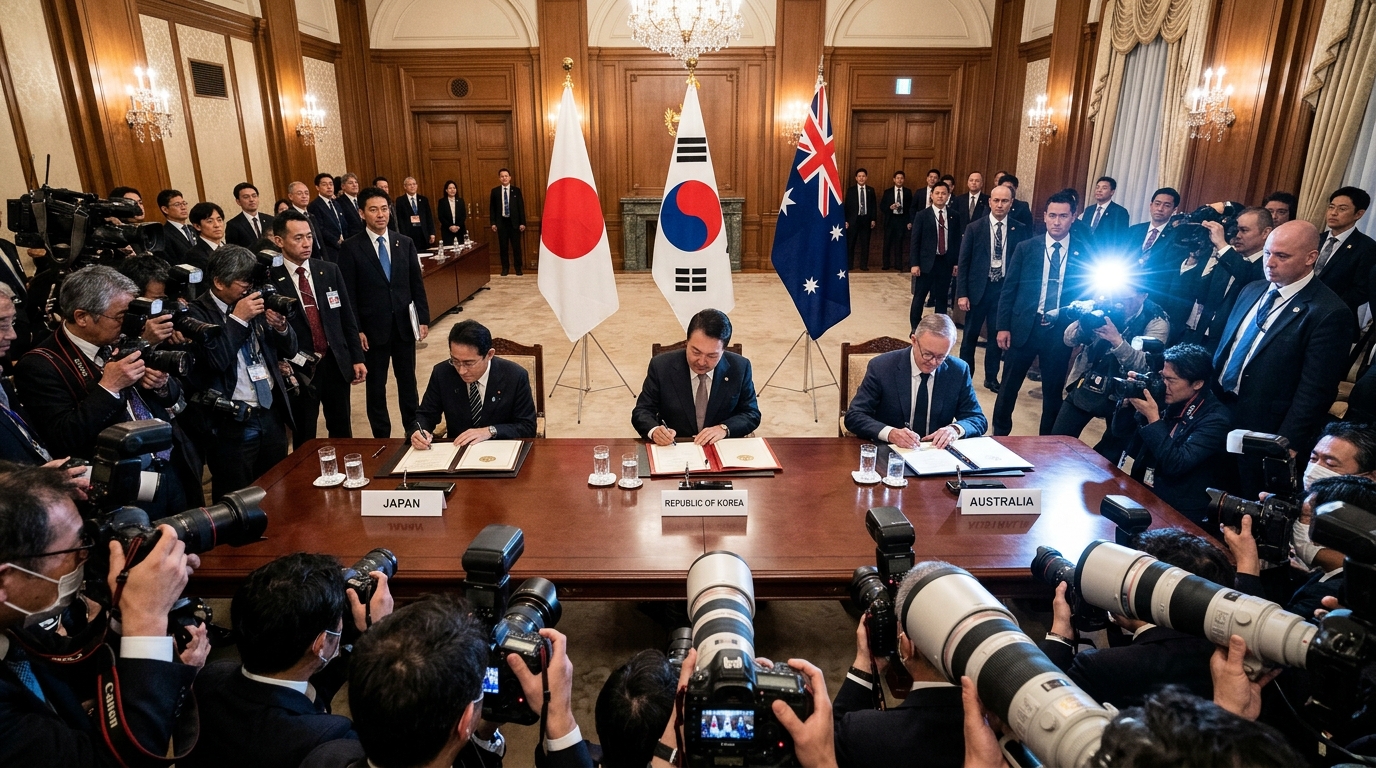
Delegation chiefs sign the Tokyo Maritime Security Accord under national flags during a formal ceremony in Tokyo on Thursday.
Historic Indo-Pacific Accord: Japan, South Korea, and Australia Ratify Expanded Trilateral Maritime Security Pact
TOKYO — In a historic milestone for regional collective defense, the foreign and defense ministers of Japan, the Republic of Korea, and Australia on Thursday formally signed and ratified the comprehensive Tokyo Maritime Security Accord.
The treaty establishes an unprecedented level of trilateral defense interoperability, linking regional maritime radar networks, undersea sonar monitoring arrays, and naval patrol assets across the Sea of Japan, the East China Sea, and northern Pacific shipping routes.
Cornerstone Pillars of the Trilateral Accord
- Automated Threat-Data Fusion: The defense forces of all three democracies will link tactical data networks via sovereign encrypted satellite links, allowing instant detection of unregistered vessels and uncrewed underwater reconnaissance crafts.
- Rotating Joint Naval Taskforces: Beginning in early 2027, combined naval flotillas comprising destroyers and anti-submarine patrol aircraft will conduct continuous freedom-of-navigation missions along essential international transit corridors.
- Critical Minerals & Logistics Shield: The pact binds signatories to mutual supply chain protection protocols, preventing commercial maritime choke-points from obstructing semiconductor precursors and lithium shipments.
"Today, three robust democracies reaffirm that peace, open seas, and the international rule of law in the Indo-Pacific are collective obligations that we will defend with unity," announced Japan's Minister of Foreign Affairs during a joint press conference at the Prime Minister's Official Residence.
Trilateral Maritime Security Capabilities Overview
| Dimension | Combined Operational Assets | Primary Strategic Role | Deployment Status |
|---|---|---|---|
| Surface Fleet Interoperability | 42 Aegis-Equipped Guided Missile Destroyers | Escort and Air Defense Coverage | Active Coordination |
| Maritime Patrol & Reconnaissance | 68 P-1 & P-8A Maritime Aircraft | Subsea Sonar Sweeps & Surface Surveillance | Daily Operational Cadence |
| Encrypted Tactical Data Feeds | Sovereign Satellite Constellation Mesh | Sub-Second Threat Dissemination | Full Operational Integration |
Diplomatic Significance and Regional Reaction
The formalization of the treaty closes decades of historical diplomatic hesitations between Seoul and Tokyo, spurred by escalating ballistic missile testing in Pyongyang and heightened naval maneuvers in the Taiwan Strait. Observers throughout Southeast Asia welcomed the stability-enhancing transparency provided by the pact.
Our International Desk
Senior Diplomatic & Foreign Correspondents
Our International Desk brings together experienced foreign correspondents from Brussels, Washington, Geneva, Tokyo, and Singapore, delivering factual reporting and verified global analysis.