North Sea Supergrid Surpasses Historic 100-Gigawatt Milestone in Synchronized Offshore Wind Transmission
Interconnected HVDC subsea cable network delivers continuous zero-emission power across five European nations, breaking fossil fuel dependency records.
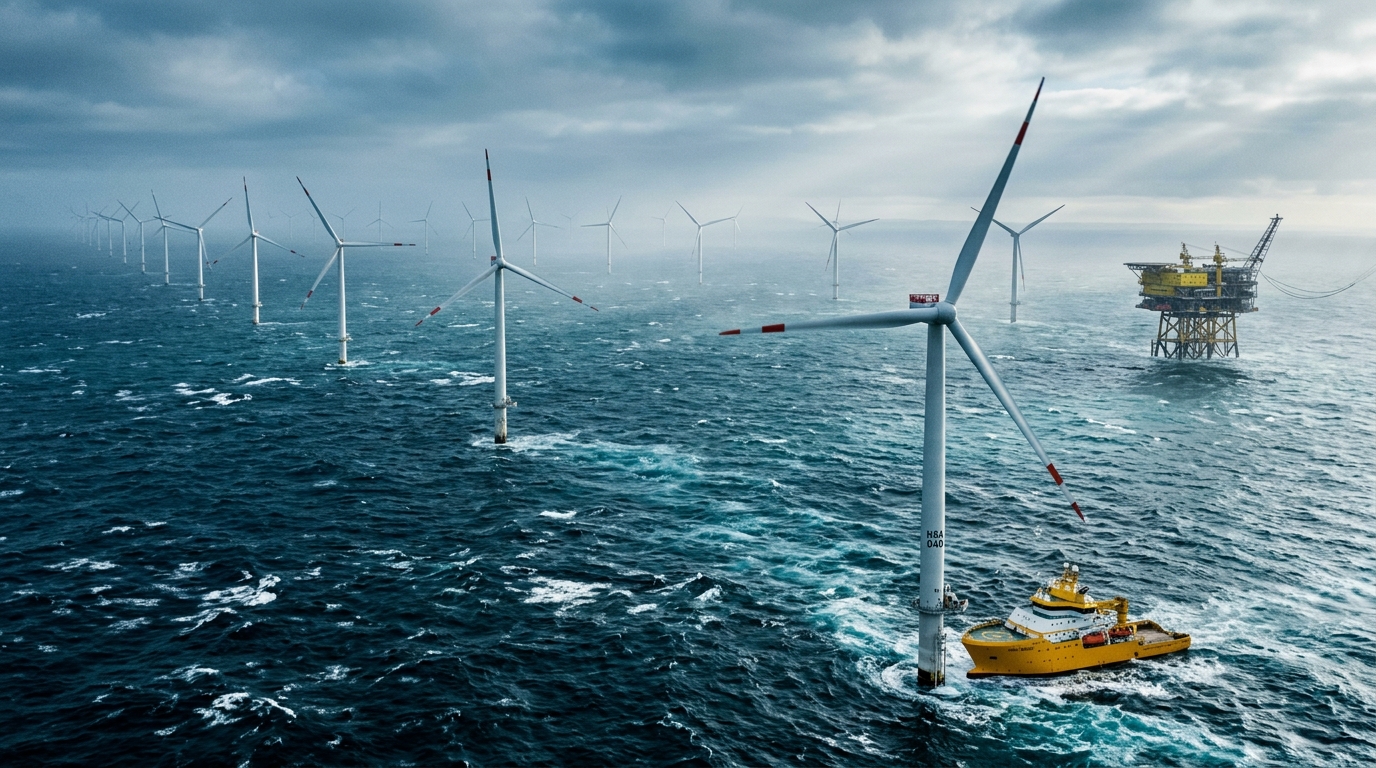
Offshore wind turbines rotate in strong coastal winds across the North Sea supergrid network on Thursday morning.
North Sea Supergrid Surpasses Historic 100-Gigawatt Milestone in Synchronized Offshore Wind Transmission
OSLO / THE HAGUE — In an unprecedented vindication of multilateral clean energy infrastructure, grid transmission consortiums across northwestern Europe announced on Thursday that the integrated North Sea offshore supergrid has officially surpassed 100 gigawatts (GW) of synchronized transmission capacity.
Driven by sustained autumn gale winds and the commissioning of three new deepwater floating turbine clusters off the coast of Scotland and the German Bight, the subsea High-Voltage Direct Current (HVDC) network delivered enough electricity to power approximately 85 million homes simultaneously.
Milestones of the Synchronized North Sea Network
- Subsea Interconnector Reliability: The network of cross-border HVDC interconnector cables functioned at 99.4% transmission efficiency, dynamically channeling excess generation from Denmark and the UK into Norwegian pumped-hydro storage reservoirs.
- Coal & Gas Displacement: During the peak 72-hour generation surge, natural gas turbine utilization across northern Europe plummeted by 64%, curtailing millions of metric tons of carbon dioxide emissions.
- Price Stabilization Effects: Wholesale day-ahead electricity prices in participating bidding zones declined to seasonal lows, providing critical economic relief to energy-intensive manufacturing clusters.
"The North Sea is no longer merely a maritime trading basin; it has become the green powerhouse of Europe, providing tangible proof that clean energy grids can achieve supreme reliability at continent-wide scale," observed Sarah Jenkins, Chief Environmental Correspondent.
North Sea Supergrid Operational Metrics (Peak Generation)
| Host Nation Sector | Installed Capacity (GW) | Real-Time Output (GW) | Grid Destination Interconnector |
|---|---|---|---|
| United Kingdom Sector | 38.5 GW | 35.8 GW | NeuConnect & Viking Link |
| German Bight Array | 29.2 GW | 27.6 GW | TenneT Offshore DC Hubs |
| Netherlands Offshore | 18.4 GW | 17.2 GW | IJmuiden Ver Transmission Line |
| Denmark & Norway Deepwater | 16.8 GW | 15.7 GW | North Sea Link to Hydro Storage |
| Total Synchronized Grid | 102.9 GW | 96.3 GW | Multi-Nation Synchronous Backbone |
Long-Term Net-Zero Trajectory
EU and British energy regulators reaffirmed that with additional floating turbine leases scheduled for auction in late 2027, the North Sea coalition remains firmly on schedule to achieve 300 GW of clean offshore capacity prior to 2050.
Sarah Jenkins
Environmental & Climate Correspondent
Sarah Jenkins is an award-winning investigative journalist specializing in climate policy, renewable energy transitions, and ecological governance.