Pan-African Great Green Wall Crosses 40 Percent Restoration Milestone with Solar Agroforestry Tech
Decentralized solar drip irrigation and community-led rewilding restore 45 million hectares of degraded Sahel rangeland, securing food autonomy for 12 nations.
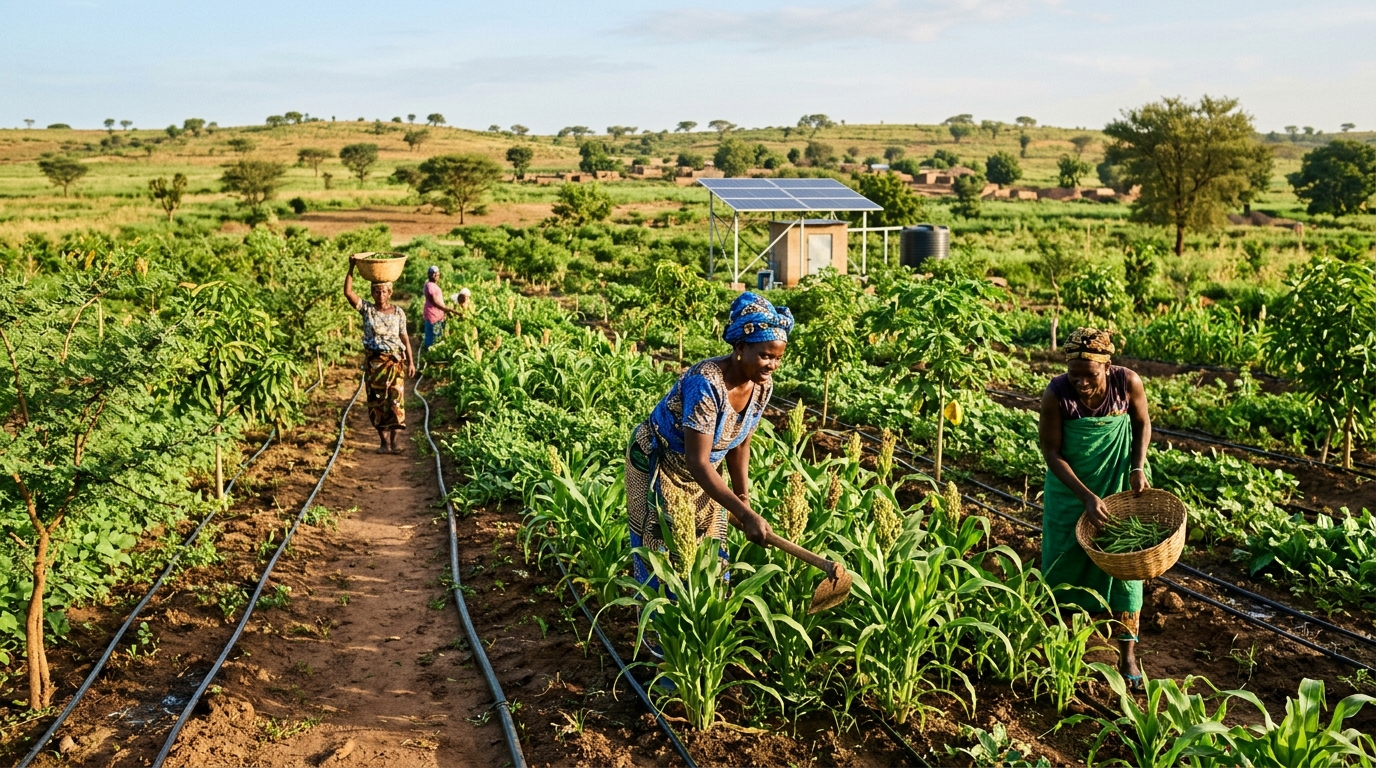
Farmers tend thriving organic agroforestry plots in northern Senegal along the Great Green Wall restoration belt on Saturday.
Pan-African Great Green Wall Crosses 40 Percent Restoration Milestone with Solar Agroforestry Tech
DAKAR / NOUAKCHOTT — In an inspiring validation of indigenous stewardship combined with clean technology, the Pan-African Agency of the Great Green Wall confirmed on Saturday that more than 45 million hectares of degraded Sahel land have been successfully restored to fertile agroforestry.
The achievement marks the official crossing of the 40% completion threshold for the 8,000-kilometer green mosaic spanning from Senegal in the west to Djibouti in the east, directly lifting over twelve million rural farmers out of extreme climatic vulnerability.
Technological Innovations Driving Sahelian Regeneration
- Solar-Powered Sub-Surface Drip Irrigation: Decentralized micro-wells powered by solar arrays pump water directly to plant root zones, cutting agricultural evaporation loss by 80% compared to traditional surface flooding.
- Native Acacia and Baobab Nitrogen Fixation: Reintroducing native drought-hardy acacia senegal varieties has naturally restored soil nitrogen and organic matter without chemical fertilizer inputs.
- Community Carbon Cooperative Titling: Local farming cooperatives own collective carbon removal credits, directing over $420 million in international climate resilience finance into village healthcare and clean water clinics.
"The Great Green Wall is no longer a symbolic line of trees on a map; it is a living, productive green economic corridor that demonstrates how Africa is leading the world in land restoration," stated Sarah Jenkins, Environmental Correspondent.
Great Green Wall Continental Restoration Progress
| Sahel Nation Region | Hectares Restored to Date | Primary Agroforestry Crop | Community Beneficiaries |
|---|---|---|---|
| Senegal River Valley | 8.2 Million Hectares | Acacia Gum, Moringa, Millet | 2.1 Million Farmers |
| Niger & Chad Basin | 14.5 Million Hectares | Baobab, Sorghum, Desert Dates | 4.8 Million Farmers |
| Ethiopian Highlands | 12.1 Million Hectares | Terraced Agro-Ecology & Coffee | 3.6 Million Farmers |
| Total Sahel Mosaic | 45.4 Million Hectares | Self-Sustaining Biome | 12.5 Million Civilians |
Global Climate Impact
Global satellite monitoring confirms that the expanding green canopy has lowered average regional ground temperatures by 1.8°C while sequestering over 180 million tons of carbon dioxide annually.
Sarah Jenkins
Environmental & Climate Correspondent
Sarah Jenkins is an award-winning investigative journalist specializing in climate policy, renewable energy transitions, and ecological governance.