The Peril of Digital Sovereignty: Why Regional Data Borders Threaten Global Scientific Progress
Balkanizing the open internet through national cloud firewalls may satisfy geopolitical anxieties, but it risks blinding mankind to planetary crises.
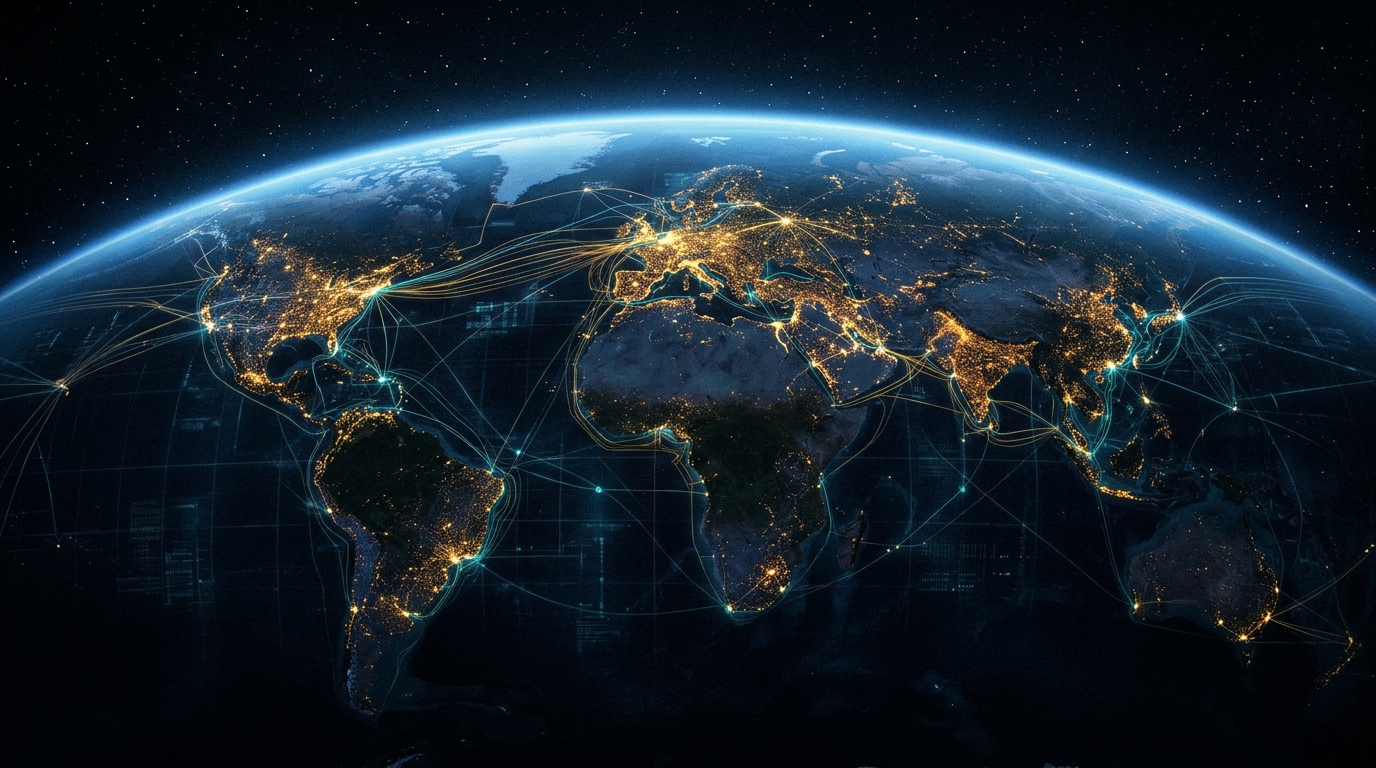
Global communication grids illuminate the globe in an interconnected network essential for international scientific progress.
The Peril of Digital Sovereignty: Why Regional Data Borders Threaten Global Scientific Progress
By Tariq Al-Mansoor
Across diplomatic capitals, few phrases are uttered with more reverence today than 'digital sovereignty.' From Brussels and Washington to Beijing and New Delhi, policymakers insist that data is the sovereign wealth of the twenty-first century—a resource to be quarantined within territorial borders, processed on domestic servers, and guarded behind national cryptographic walls.
While the imperative to safeguard citizen privacy and defend domestic infrastructure against hostile cyber warfare is legitimate, the unchecked balkanization of the global internet into heavily fortified 'splinternets' poses an existential hazard that policymakers are recklessly ignoring: the fragmentation of the global scientific commons.
The Cost of Digital Fiefdoms
For eight decades, the arc of modern scientific discovery has relied upon frictionless, planetary collaboration:
- Epidemiological Surveillance: When novel viral mutations emerge, genome sequencing data must circulate globally within minutes. National data embargoes turn public health emergencies into geopolitical hostages.
- Climate Modeling: Accurately projecting atmospheric changes requires combining satellite telemetry from NASA, the European Space Agency, ISRO, and JAXA into open supercomputing models. Restricting telemetry flows behind national firewalls blinds humanity to planetary tipping points.
- Open AI Safety Verification: If AI models are sequestered within sovereign national enclaves, international inspection protocols and safety benchmarks become impossible to verify, accelerating a dangerous algorithmic arms race.
"When algorithms and empirical observations are trapped behind political customs checkpoints, truth itself becomes regionalized. Science cannot survive in a fortress."
The Architecture of Fracture vs. The Commons
| Internet Era | Governing Architecture | Scientific Data Velocity | Predominant Geopolitical Risk |
|---|---|---|---|
| Open Internet Era (1990–2018) | Universal End-to-End Protocols | Instantaneous Multi-Continent Sharing | Vulnerability to Unregulated Corporate Monopolies |
| Sovereignty Transition (2019–2025) | National Data Residency Mandates | Fragmented by Regional Legal Walls | Supply Chain Friction & Jurisdictional Arbitrage |
| Splinternet Era (2026–Present) | Walled Sovereign Enclaves | Blocked Behind Cryptographic Embargoes | Complete Breakdown of Multilateral Crisis Response |
Reclaiming the Scientific Commons
National security and scientific openness need not be irreconcilable enemies. Just as international maritime law created high seas conventions guaranteeing innocent transit for research vessels, international diplomacy must urgently ratify a Digital High Seas Treaty.
Such a framework would permanently designate non-military genomic, meteorological, and academic telemetry as protected universal common goods, exempt from political embargoes and national border controls.
If we surrender the open internet to the altar of sovereign paranoia, we will preserve our national borders only to drown together in crises we no longer have the shared sight to solve.
Tariq Al-Mansoor
Middle East Bureau Chief
Tariq Al-Mansoor has reported from Cairo, Beirut, Jerusalem, and Doha for over fifteen years, focusing on diplomatic mediation and humanitarian affairs.

